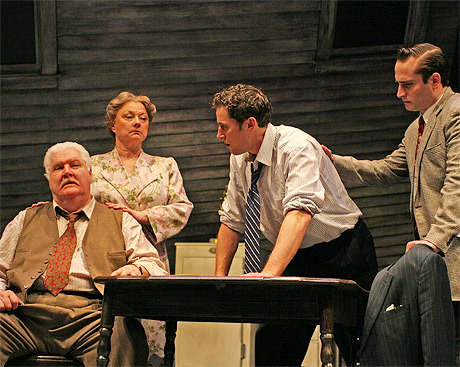
Social Inequality The social inequality is also shown in the trial. Segregation still occurred in the courthouse although the court is a place of law, justice and human rights. Another example of social inequality is when Calpurnia takes Jem and Scout to her church. Upon arrival, Lula, a regular member of the church, confronts Calpurnia as to why she is ‘bringin’ white chillun’ to the church. This is ironic as black people were the inferior race of society and yet Lula is defending and continuing the harsh segregation that occurs. This is also shown in To Kill a Mockingbird when Dill is describing Dolphus Raymond as ‘He doesn’t look like trash’ when he associates himself with black people and children. There is a set of behaviour that different statuses are expected to conform and that all the races no matter the lowliness and despicableness are above any black person. This is seen in the quote the only difference between Bob Ewell and ‘the worst among those he despised’ was the fact that if he were scrubbed hard enough his skin would be stark white.
.jpg?timestamp=1347100842123) In Death of a Salesman, social inequality is seen when the wealth and occupation of a person are measured against the rest of society. For instance, Willy con In Death of a Salesman, social inequality is seen when the wealth and occupation of a person are measured against the rest of society. For instance, Willy constantly feels the pressures of Social Inequality and therefore feels incompetent and incapable compared with the rest of the world. This is because his job doesn’t bring as much income as others like Charley, his neighbour, who earns more money than he does. Social inequality is an important issue in Death of a Saleman as this continually lowers Willy’s confidence and eventually leading to his suicide because he believed that by doing so his son, Biff, could succeed in the salesman business through his death. Social Inequality is also seen in Howard’s voice recorder which symbolises the difference in social status between Howard and Willy. Willy can not even afford to pay off his mortgage with much less money to spend on trivial items such as Howard’s voice recorder. This shows the difference in wealth and income between a successful salesman and Willy.
Innocence
Innocence takes many forms in To Kill a Mockingbird and Death of a Salesman. In To Kill a Mockingbird, Scout loses her innocence as she realises the cruel reality of the world as she witnesses the trial and its aftermath. In Death of a Salesman, Willy’s innocence is corrupted with him realising that his American Dream does not actually exist. 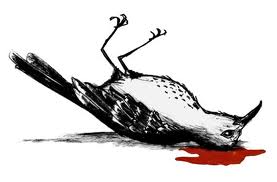 In To Kill a Mockingbird, innocence awakens Scout to the extent of racial prejudice in America and even her little town of Maycomb. This is where she loses her innocence and realises that justice is not prevalent in every part of life and that there are some people who are assumed superior to others. She also finally understands the context of the words that she speaks instead of just blindly preaching what others have told her. This is compared to her blind naivety where she did not fully understand the context in which she lived under and the ‘full picture’ of the differences in society. In Death of a Salesman, Willy experiences the turmoil of recognising reality but also ignoring it. This is because he does not want to lose his ‘innocence’ and wake up to the fact that he is not as important or prized as he thinks himself to be. Though innocence in Death of a Salesman is not as dominant as the innocence that Scout possesses in To Kill a Mockingbird, it is essentially the same thing. It shows both characters witnessing reality in its true form and the awakening to the ‘real world’. However in To Kill a Mockingbird, Scout acknowledges this fact and hopes that someday this can change whereas Willy, in Death of a Salesman, goes through an emotional and psychological struggle in which he just relapses into his previous way of thinking. By acknowledging the real world, Willy is not only losing his innocence but is also forced to realise that his dream is nothing but empty air and that it cannot be
Like father, like sons, the inability to grow up is also evident in the characters of Biff and Happy. They have not established themselves yet and are discontent with their life. Their dissatisfaction is shown through Biff’s constant moving from ranch to ranch and Happy’s perpetual dating and hence abandonment of woman after woman.
Sexism
Sexism is a recurring theme in both To Kill a Mockingbird and Death of a Salesman. It is shown in Willy’s treatment of Linda as well as how Aunt Alexandra’s wishes for Scout to behave in To Kill a Mockingbird. In Death of a Salesman, Willy often shouts, accuses, rants and occasionally physically abuses Linda even though she ensures that the family finances are handled, does the housework and does her best to keep the family together. Willy underestimates Linda’s abilities and even cheats on her with another woman. He also is verbally abusive towards Linda, to the point that Biff intervenes at one point in the play to tell him not to ‘talk to her like that’. This shows that Willy is sexist and that he believes that her role in the family should be a silent and submissive one. Linda’s opinions are often ignored so therefore she always tries to support Willy’s thoughts and ambitions even though she knows that they are false and will not come true. This is shown in the fact that she always believes Willy and takes the $50 he says he brings in from work when she knows he has borrowed the money from Charlie, their neighbour. In To Kill a Mockingbird, Scout is shown to be constantly forced and scolded by Aunt Alexandra for her tomboyishness and her unwillingness to behave like a true lady. Scout is often seen as being a boy as demonstrated when Jem tells her ‘I declare to the Lord, you’re getting’ more like a girl everyday!’ This shows that girls in To Kill a Mockingbird are supposed to be demure and feminine while Scout is boyish and adventurous. Jem’s quote highlights the differences of the roles females played in society compared to the attitude that Scout takes on, that is, the complete opposite. The society of Maycomb expected the behaviour of Scout to be similar to the missionary club members which are exhibited in the book. People like Miss Stephanie and Miss Rachel are the epitome of Southern womanhood and they are stereotyped as being incapable of independence, submissive and gossiping and sipping tea at most. |